
Written by Andrea Conomos
Accredited Exercise Physiologist
Bachelor of Applied Science (Exercise Physiology), The University of Sydney
What is an Exercise Physiologist?
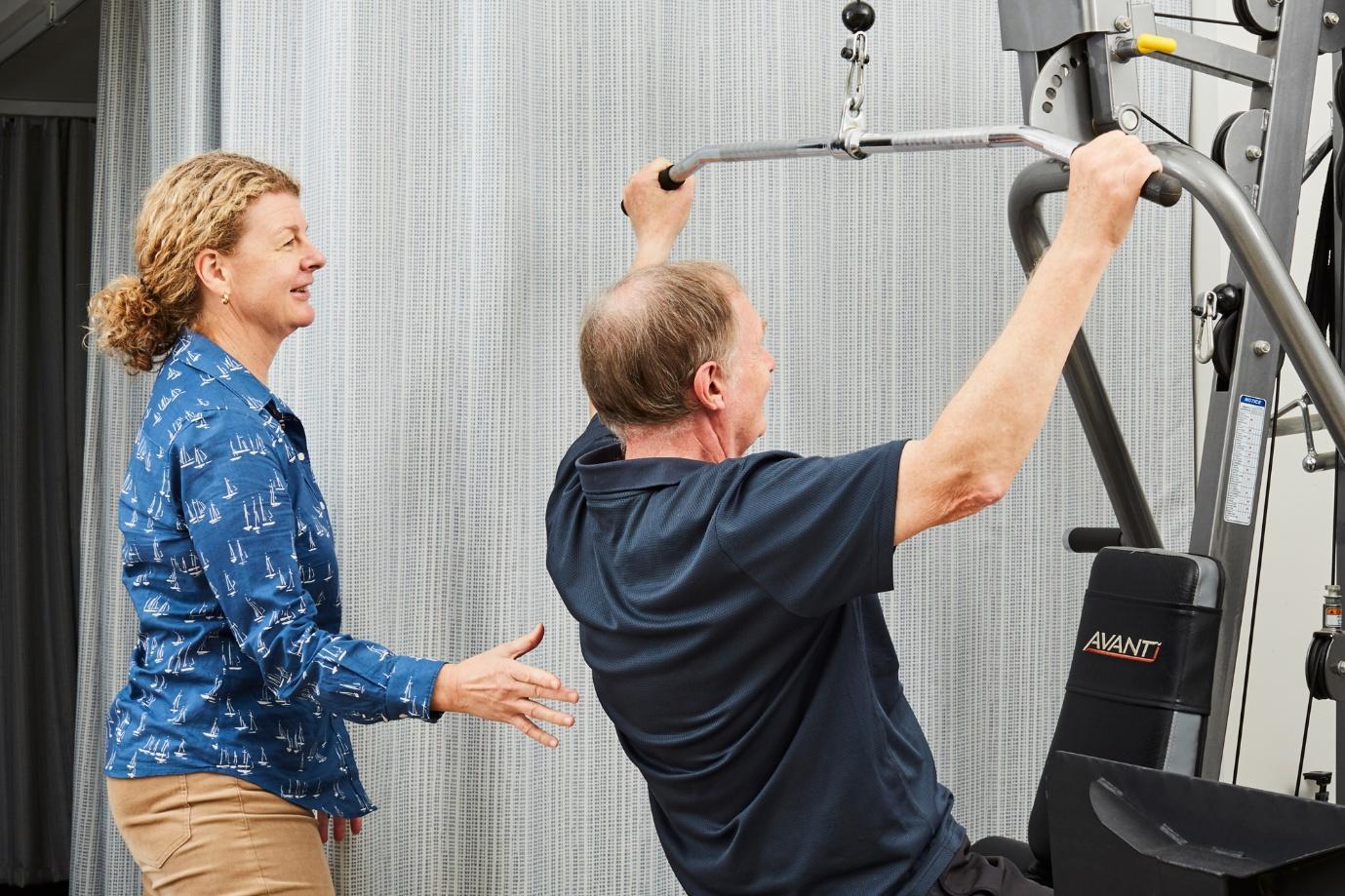
An Accredited Exercise Physiologist (AEP) is a university qualified allied health professional who uses exercise as a treatment.
In Australia, AEPs complete at least four years of university study and are accredited through Exercise & Sports Science Australia (ESSA). Their training sits across two worlds. They understand how the body responds to exercise, and they understand how chronic disease, injury and ageing change that response. That second part is what separates an Exercise Physiologist from a personal trainer, and it explains why their programs look the way they do.
Who we work with
- People managing long term conditions such as type 2 diabetes, heart disease, osteoarthritis and chronic back pain
- People during and after cancer treatment
- Older adults wanting to improve balance, strength and confidence on their feet
- People returning to activity after an injury or surgery, once the acute phase has settled
- Anyone who has been told to “exercise more” but is not sure where to start or what is safe
You do not need to be unfit or unwell to see one. Plenty of people come in simply because they want exercise that fits their body and their history.
The part people underestimate
Exercise is usually treated as general advice, something added to the end of an appointment. The research suggests it deserves a lot more respect than that.
A large review of the evidence found that exercise works as a genuine treatment across 26 different chronic diseases, spanning heart and lung conditions, metabolic disease, musculoskeletal problems, cancer and mental health (Pedersen & Saltin, 2015). Few single treatments have that kind of reach.
The problem is rarely whether exercise helps. It is getting the type, amount and progression right for the person in front of you, and then making it something they can keep doing.
Do I need a physio or an Exercise Physiologist?
Often both, at different stages. A physiotherapist is usually your first stop for diagnosing an injury, settling pain and restoring movement. An Exercise Physiologist tends to take over when the goal shifts to building long term capacity, managing a chronic condition, or turning rehab into a sustainable routine.
At a clinic like ours the two work closely together, so the handover is seamless rather than starting from scratch.
What the research actually says
Three findings matter most.
- Exercise can hold its own against medication. A study comparing trials of exercise and drug treatments found no clear difference in mortality outcomes between the two for preventing further heart disease events and for prediabetes, and exercise appeared more effective than drugs in stroke rehabilitation (Naci & Ioannidis, 2013). Far fewer exercise trials exist, so this is not a reason to stop your medication. It is a reason to take exercise seriously alongside it.
- Exercise is now part of cancer care. Australian guidance recommends that exercise be embedded as standard practice in cancer care, with programs tailored by a qualified exercise professional to the person’s treatment and side effects (Hayes et al., 2019).
- Most people need more than they are doing. International guidelines recommend 150 to 300 minutes of moderate activity each week, plus muscle strengthening on at least two days (Bull et al., 2020). For someone with a health condition, reaching that safely usually needs a plan rather than willpower.
One caution. More is not always better, and generic programs from the internet do not account for blood sugar swings, heart medications, joint load or fatigue from treatment. This is exactly where tailored prescription earns its keep.
Do’s and don’ts
Do
- Bring your history. Medications, recent test results and any specialist letters help your Exercise Physiologist dose your program safely.
- Start where you are. A good program begins at your current level and progresses from there.
- Include strength work. It matters for bones, blood sugar, balance and independence as we age (Bull et al., 2020).
- Ask your GP about a care plan if you have a long term condition. It may help with the cost.
Don’t
- Don’t wait until you feel fit enough. That is what the sessions are for.
- Don’t assume all pain means stop. Some discomfort during exercise is normal and manageable. Your Exercise Physiologist will help you tell the difference between normal muscle discomfort and the pain of an injury.
- Don’t treat it as a short course. The benefits of exercise fade when it stops, so the real goal is a routine you can keep.
- Don’t compare yourself to a gym program. Your plan is built around your health, not someone else’s goals.
How is this different from…?
Three professions people often confuse with Exercise Physiology:
- A personal trainer. Trainers work with generally healthy people on fitness goals. Exercise Physiologists are allied health professionals trained to work with injury, illness and complex medical histories.
- A physiotherapist. Physios assess, diagnose and treat injuries using a range of hands on and exercise based approaches. Exercise Physiologists focus specifically on exercise as the treatment, often over the longer term.
- A dietitian. Both commonly help with conditions like diabetes and heart disease, but from different angles. Many people benefit from seeing both.
How do I pay for it?
Exercise Physiology is covered by several funding pathways:
- Medicare. If you have a condition that has lasted, or is likely to last, at least six months, your GP may prepare a GP Chronic Condition Management Plan. This can give you rebates on up to five allied health sessions each calendar year, shared across services such as physiotherapy and exercise physiology (Australian Government Department of Health, Disability and Ageing, 2025).
- Private health insurance. Many extras policies include exercise physiology. Check with your fund.
- Workers compensation, CTP, NDIS and DVA. Exercise physiology may be funded under these schemes where it is part of an approved plan.
When should I see an Exercise Physiologist?
Earlier than most people do. If you have been told to exercise for a health condition, if you are coming out of physio and want to keep building, or if you simply are not sure what is safe for your body, an assessment is a good starting point.
Your first session should cover your health history and goals, test where you are currently at, and leave you with a clear, achievable plan rather than a generic handout.
Our Exercise Physiologists work with clients one on one and also run small group classes focused on balance and lower limb strength. If you would like to get started, pop in for an appointment here at Glebe Physio.
References
- Pedersen BK, Saltin B. Exercise as medicine – evidence for prescribing exercise as therapy in 26 different chronic diseases. Scandinavian Journal of Medicine & Science in Sports. 2015;25(Suppl 3):1-72. doi:10.1111/sms.12581
- Naci H, Ioannidis JPA. Comparative effectiveness of exercise and drug interventions on mortality outcomes: metaepidemiological study. BMJ. 2013;347:f5577. doi:10.1136/bmj.f5577
- Hayes SC, Newton RU, Spence RR, Galvão DA. The Exercise and Sports Science Australia position statement: Exercise medicine in cancer management. Journal of Science and Medicine in Sport. 2019;22(11):1175-1199. doi:10.1016/j.jsams.2019.05.003
- Bull FC, Al-Ansari SS, Biddle S, et al. World Health Organization 2020 guidelines on physical activity and sedentary behaviour. British Journal of Sports Medicine. 2020;54(24):1451-1462. doi:10.1136/bjsports-2020-102955
- Australian Government Department of Health, Disability and Ageing. MBS Note AN.0.47: GP chronic condition management plans. Medicare Benefits Schedule. 2025. Available from: https://www9.health.gov.au/mbs/fullDisplay.cfm?type=note&q=AN.0.47